Contact Zones-Shaping the global art world
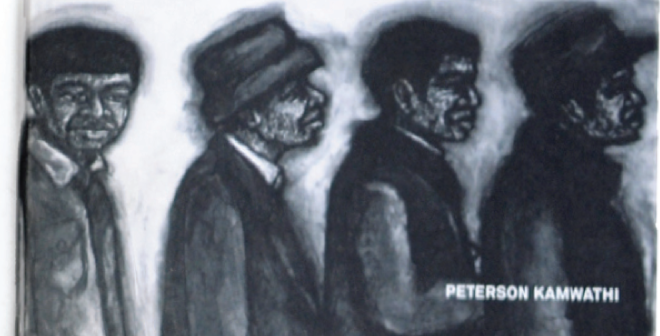
The Goethe-Institut recently launched three monographs by Kenyan artists Sam Hopkins, Peterson Kamwathi and Ato Malinda, edited by Contact Zones Apart from a slim volume on Richard Onyango by Kwani Trust, these are the first really comprehensive art books in Kenya. They are beautifully designed and photographed. Reasonably priced, they provide an in depth study of each of the three artist’s work over the last few years.
It is rare, particularly in Africa, to find art books that represent the artist in their own words. Here, the artists themselves chose the direction, writers and images, giving us a fascinating insight into each one’s practice. Rooted in his observations, concerns and understanding of Nairobi life, Sam Hopkins’s art is contextual. His work can be playful, informative and interactive, often requiring the viewer to participate. The book catalogues Hopkins’s solo and collaborative work, as well as the films of Slum TV (the Mathare based organisation he founded). The photographs depict Hopkins’ exhibitions, videos and installations. The accompanying “conversational” text reveals Hopkins’s intentions so well, making the work very accessible.
Peterson Kamwathi’s monograph focuses on his extraordinary, large-format charcoal drawings. These include a powerful post-election series called “Sitting Allowance”, and the subsequent “Queue” series. Despite being a master printmaker, painter and animator, Kamwathi chose to focus this book on his drawings. The Q&A with Sam Hopkins is a lively discussion that explains, in the words of the artist, his motivation and very personal feelings whilst making the drawings. Kamwathi is one of our most respected artists, and most of this work is now in international collections, so this book is a memento to treasure.
An internationally-renowned performance artist, Ato Malinda’s work is conceptual and research based. She has travelled widely in the last few years, and this book gives us a chance to see much of her work done outside Kenya. The formal art language by acclaimed writers and curators, such as Simon Njami, may be difficult for some readers to decipher, but it is important to look at Malinda’s work in a global context-- something that has not been done often enough in Kenya.
For art enthusiasts who want a deeper understanding of Kenyan contemporary art and how and why artists make work, these books are a must. Available at the Goethe-Institut, www.goethe.de/nairobi.
| < Prev | Next > |
|---|
By Danda Jaroljmek


LATEST EVENTS
AROUND THE WEB


